Diagnose the constraint
Map the objective, current workflow, available evidence, stakeholders and practical restrictions. Separate symptoms from the decision the team needs to make.
Strategy · Governance · Implementation
When AI experiments are scattered across a business, another tool can add to the confusion. Vladimir helps leadership teams examine the real constraint, choose a useful starting point and connect strategy, people, ownership and workflow.
For: Founders, executives and transformation leaders who need a clear direction for practical AI adoption.
Discuss your brief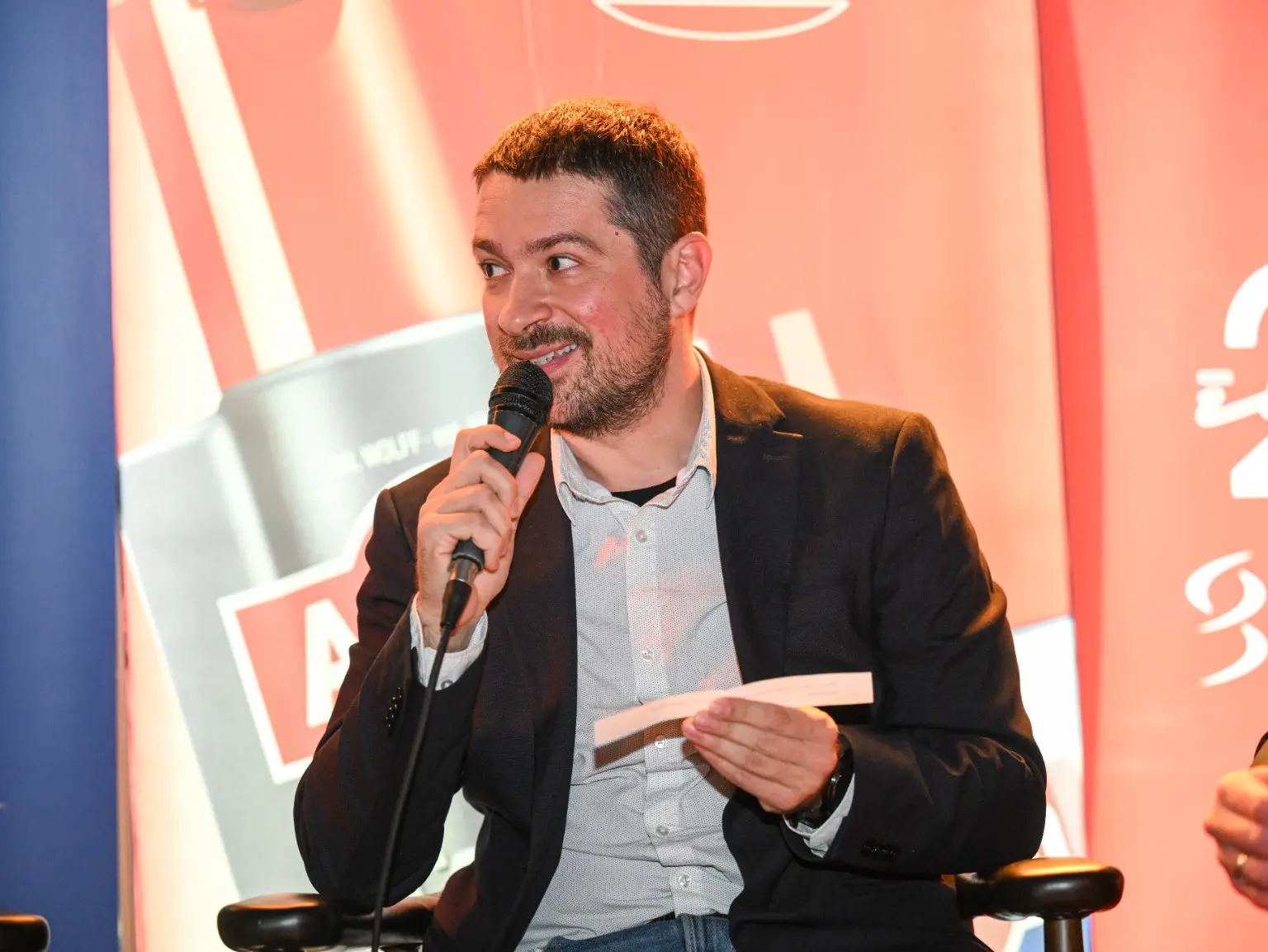
The decision before the engagement
A request for AI support may reveal a gap in the offer, customer journey, process, responsibilities or team alignment. The diagnostic should establish what needs to change and where AI can make a useful contribution before selecting a solution.
Format: A focused diagnostic, a facilitated leadership workshop or a bounded adoption engagement. Scope, review points and the handover are agreed around the problem.
Map the objective, current workflow, available evidence, stakeholders and practical restrictions. Separate symptoms from the decision the team needs to make.
Compare options by value, feasibility and risk. Define what AI may do, what people must check and which result would justify continuing.
Examine the work produced, corrections required and evidence of usefulness. Document ownership, operating steps and the next review decision.
Useful work to take forward
The final scope depends on your audience, constraints and priorities. These are the kinds of outputs we can build the engagement around.
Prepare a useful first conversation
Bring one recurring workflow, a concrete business goal and the constraints your team must respect. Existing examples, policy boundaries and known failure points help define a realistic starting scope.
Vladimir is an international executive trainer, keynote speaker and consultant, and Partner & Creative Director at Piksel. His work connects AI adoption, leadership, strategic communication and marketing.
Read the professional background and programme examples →Why do promising AI initiatives stall inside organisations?
Most organisations do not have an AI technology problem. They have an alignment problem: unclear ownership, disconnected pilots, inconsistent employee behaviour, anxiety about risk, and no shared definition of value. Without governance and adoption design, experimentation expands faster than organisational confidence.
Employees adopt tools faster than leadership can see or govern them.
Risk, IT, HR and business teams assume someone else is accountable.
People learn prompts, then return to workflows that never changed.
Activity grows, while impact, quality and risk remain unmeasured.
What does responsible AI implementation actually require?
The work begins before the workshop and continues after it. A diagnostic identifies the real constraint. Governance clarifies decisions and controls. Role-based learning builds capability. Implementation redesigns selected work. Measurement turns adoption into an operating discipline.
Map readiness, active use, risk, business priorities and capability gaps.
OUTPUTReadiness baselineDefine ownership, decision rights, policy principles and proportional controls.
OUTPUTGovernance blueprintTrain leaders and teams through role-specific scenarios, tools and decisions.
OUTPUTCapable internal championsRedesign priority workflows and establish value, risk and adoption reviews.
OUTPUTRepeatable operating cadenceAI Readiness Scan
Ten questions. Five dimensions. One useful next move—before you commit budget to another disconnected AI initiative.
Which AI governance programme fits your organisation?
Corporate investment is scoped privately after the diagnostic. The purpose of the first conversation is to define the problem, audience, urgency and outcome before recommending a format.

years leading business, brands and creative teams
What evidence shows this is built for real organisations?
Delivered through Nexus Premium Academy for senior professionals from Oman Housing Bank, Bank Dhofar and Oman PWP. The five-day programme covered governance frameworks, risk taxonomies, regulatory context, accountability, human oversight, participant workbooks and assessment instrumentation.
25+keynotes, panels, workshops and masterclasses
10+markets reached through agency, training and speaking work
40Under 40 business leadership recognition
Agency leadership and delivery experience
Vladimir is Partner & Creative Director at Piksel. Brand names refer to publicly documented Piksel work and are not presented as endorsements of this personal consultancy.
How is this different from a generic AI tools workshop?
The broader advantage
Vladimir’s AI governance offer is strengthened by more than fifteen years in marketing strategy, agency leadership, communication, emotional intelligence and customer experience. That breadth matters because adoption rarely fails inside the technology alone.
Self-awareness, trust and difficult conversations under pressure.
A narrative people can understand, believe and act on.
Customer value, positioning and commercially useful AI workflows.
Signature keynote on strategic communication under pressure: control the narrative without creating theatre.
Who leads the work?
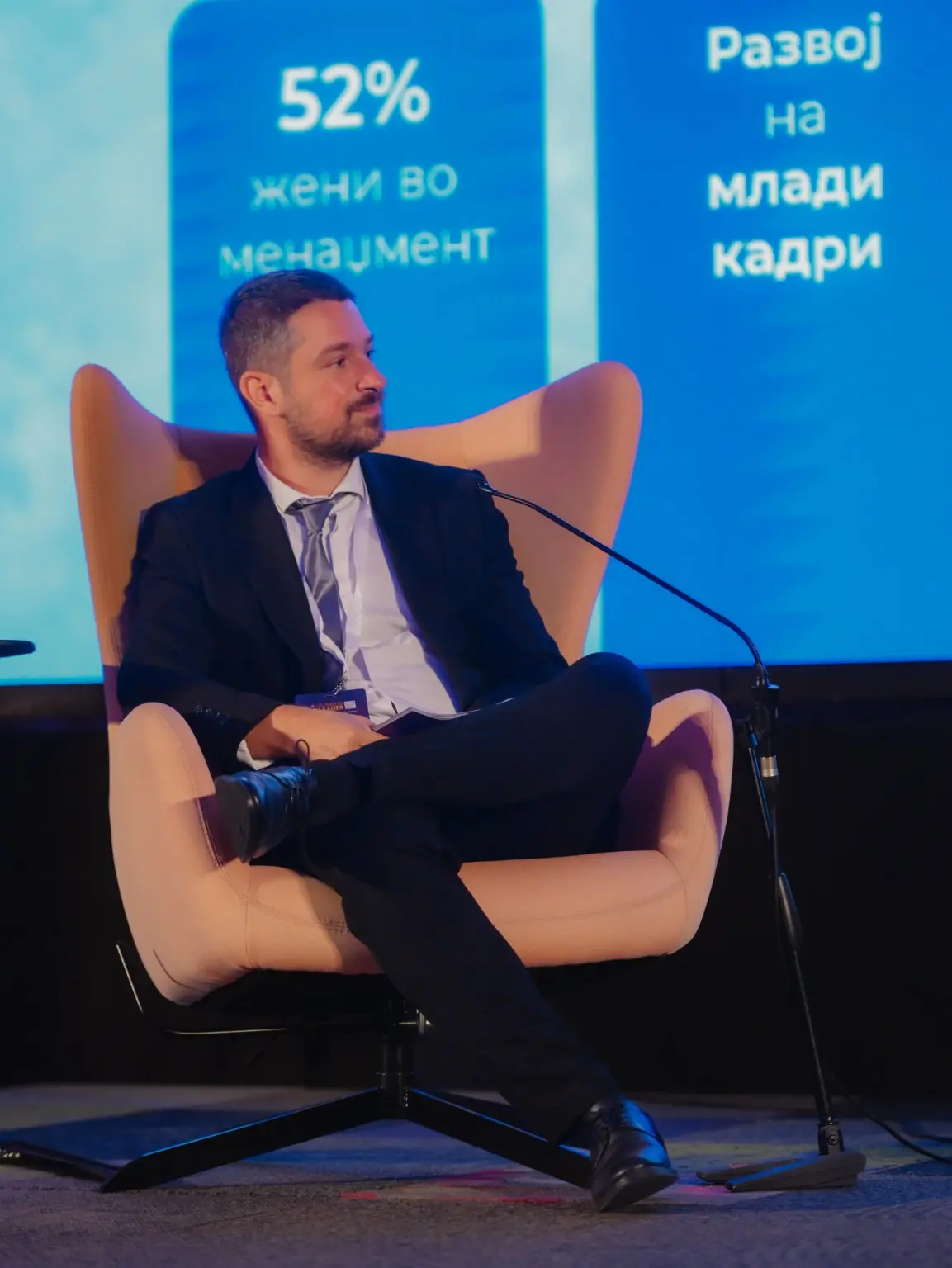
Vladimir Ristevski is an international executive trainer, keynote speaker, consultant, Partner & Creative Director at Piksel, and a published author.
His work connects AI governance, leadership psychology, strategic communication, marketing and emotional intelligence. He has built teams, campaigns, platforms and learning programmes across multiple markets—and brings that operator’s perspective into every engagement.
His approach is direct, psychology-informed and commercially grounded: no corporate fog, no tool worship, and no governance theatre.
What do leadership teams usually ask before starting?
It is a structured engagement that helps an organisation decide where AI creates value, define ownership and controls, train people by role, redesign selected workflows, and measure adoption. It connects strategy, governance, capability and implementation instead of treating AI as a stand-alone tools workshop.
Boards, C-suite leaders, HR and L&D teams, transformation leaders, governance and risk functions, marketing and communications teams, and cross-functional groups responsible for adopting AI safely and productively.
Tools training teaches features. This work begins with business outcomes, decision rights, risk, human oversight and workflow design. Participants still learn practical AI use, but within a governance and adoption system that can survive after the workshop ends.
Yes. Governance modules can be mapped to the EU AI Act risk approach, the NIST AI Risk Management Framework and ISO/IEC 42001 principles. The engagement is educational and operational; specialist legal advice remains with your legal counsel.
Yes. Vladimir delivers executive education, keynotes and customised corporate programmes in person and online. His work includes executive programmes in Muscat, keynotes and training in Skopje, speaking engagements in Sarajevo, and regional jury work in Belgrade. Content is adapted to the organisation, sector, audience and regulatory context.
An executive briefing may take half a day, a capability programme may run for several days, and an implementation sprint typically runs for six to eight weeks. The recommended format is defined after an AI Readiness Diagnostic.
One clear next step
Share the business problem, audience and urgency. You will receive a focused recommendation on whether you need an executive briefing, capability programme, implementation sprint—or no engagement at all.